
Devastating Endings
The power of hope

“You’re so lucky if you’re raised with humor. It’s one of God’s greatest gifts, because life is full of the dark and the light. You gotta look for the light.” -Catherine O’Hara
Dear Writers,
I love going to the theater.
This week, my husband had business in NYC, so I got to go along. I saw one of my favorite actresses, Leslie Manville, as well as the amazing Mark Strong, perform in Oedipus.
So, now, back at my writing desk, all I can think about are endings.
As we settled into our seats, it was clear that everyone in the theater knew the ending of Oedipus. While this version was a modern interpretation, the terrible truth remained the same. Oedipus finds out that he has killed his father and married his mother. You may be thinking: How can it be satisfying to watch a show/read a book when you know what is coming?
Here is something I learned from Nancy Werlin and her Rules of Survival: readers don’t read for the (inevitable) ending. They read for the journey. So give them a great one. (Note: when we say that an ending is inevitable, we mean that the reader can anticipate that ending. We actually read for it. We wait for it.
Throughout the performance, some of the dialogue played with our knowledge of where we were headed. There were a few lines that were even funny. But there was no laughing or even breathing when it was clear that the curse had come true. As Manville confessed what had happened to her and her long lost baby, the entire audience went silent. I will not detail what these two amazing actors said or did (although if you really want to know, please email me!), but let’s just say: it was devastating. And heartbreaking. And tragic. And they managed to make me gasp, not because I was surprised, but because the journey had been devastating. That last scene made me gasp aloud.
When I got home, I opened my manuscript and began to think about endings. Since my book has a crime, revealing the killer is my inevitable ending. But that isn’t all we have to do. In every book, the last pages are critical because they determine how the reader will feel when they leave your world.
That means: you have to give the readers the experience that they have come to expect and to love. (That’s different for different genres.)
That also means: you have to wrap up both the INNER JOURNEY and the ACTIVE JOURNEY. So, the character must change. Character transformation is the point of the story. It is why we read.
Are you ready to reach???
Marion Dane Bauer once told me: you don’t know where your story begins until you know where it ends.
Funny aside: Because the Olympics are coming—a competition with a strong focus on the thrill of winning (and agony of defeat!)—I woke up last night from my recurring dream—what I call the 99%. (I’ve been having this dream since Dorothy Hamill!) In this dream, I am given the gift of 99% perfection in some Olympic sport—usually skating or gymnastics. My only responsibility: the last pass. Friends: I ALWAYS wake up before that takes place. Because I know I can’t do what I want to achieve! I have not done the work! I don’t want to see myself flop!
Anyway, back to endings. You have to set them up to make them work their best.
At the beginning: who is your character? Do you know them? Do you know what they fear, detest, yearn for, want? Do you know what they dream about? Do you know their flaws? What are the obstacles that exist that will raise the stakes in the story?
Then look at the ending. Write down all the things that might happen. And then all the ways that each ending would show change in your character.
When I am still getting to know my characters, I go to their LOWEST MOMENT, the place where all feels lost. Often, by imagining all the things they might do after this low moment, I can find my story. Including my ending.
If you are not sure what your lowest moment is, try writing a letter from your character. Or maybe a secondary character. (They always see a lot up close.)
Doing anything next Sunday?
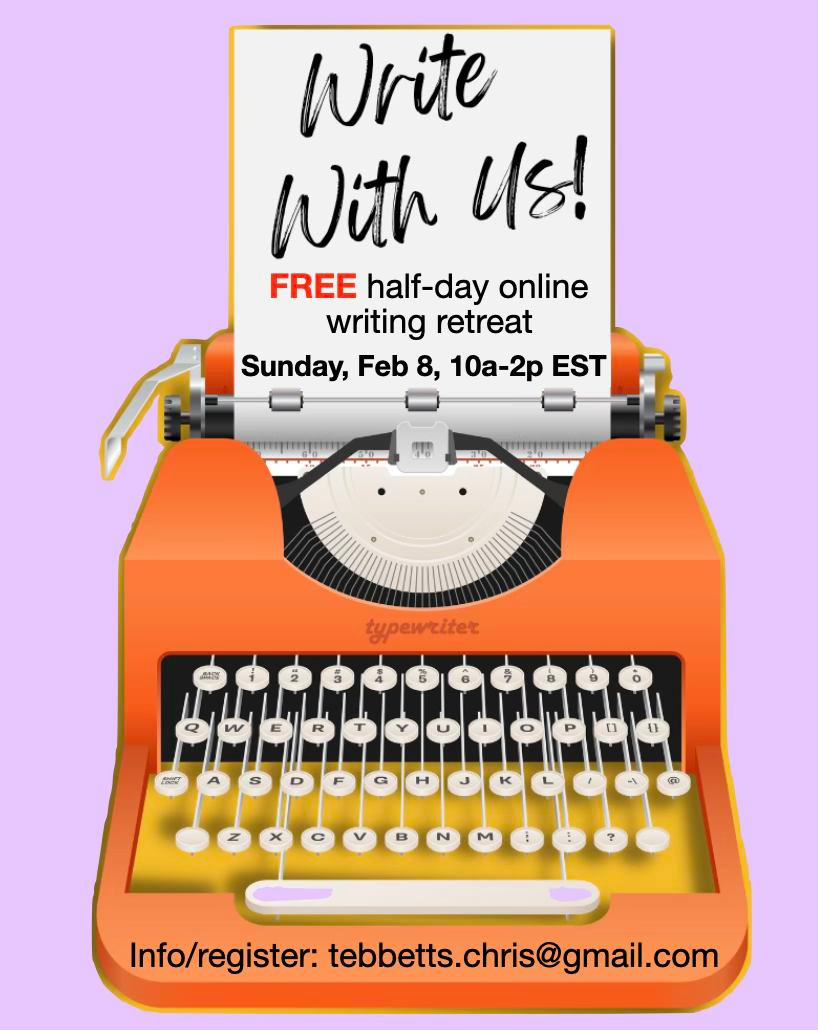
It’s free! It’s fun! You’ll get stuff done!
Have a great writing week!
Sarah
Sarah,
This could not be more timely! I am wrestling with my ending right now. I love your advice in this post, especially the part where you state, "readers don’t read for the (inevitable) ending. They read for the journey. So give them a great one. (Note: when we say that an ending is inevitable, we mean that the reader can anticipate that ending. We actually read for it. We wait for it." And the guiding questions are very helpful...you have given me my writing orders for the day. Thanks so much!
This reminds me, and you mentioned it is genre dependent, that in a romance the reader expects (DEMANDS) that the couple ends up together at the end. When I was beta reading for someone without this knowledge and was fully invested in the characters, I got angry and stopped reading when they appeared to be destined to heading in separate directions. It turns out that's part of the genre and the ending that was just a few chapters away ... was quite satisfying. I've actually become a fan of the genre during the current state of the world but don't think I'll be writing there any time soon.